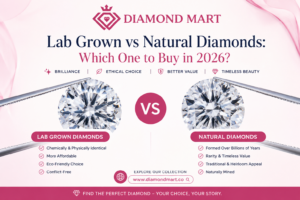
Diamonds have long been regarded as a symbol of elegance, love, and everlasting beauty. Recent years have seen the diamond industry transform substantially, and 2026 is shaping up to be the year of the most knowledgeable buyer to date. One of the biggest discussions in the jewelry market today is whether buyers should choose natural diamonds or Lab grown Diamonds (LGD).
With ongoing technological advancements, lab-grown diamonds are gaining more traction among today’s buyers. They provide a cost-effective, sustainable, and visually stunning alternative that closely resembles natural mined diamonds. At the same time, natural diamonds still hold a strong emotional and investment appeal for many buyers.
Knowing how these two choices differ is crucial. This guide will help you compare quality, price, sustainability, resale value, durability, and overall value so you can make the right decision for your lifestyle and budget.
What Are Natural Diamonds?
Natural diamonds are created deep within the Earth over billions of years through intense natural processes. They are created under intense heat and pressure and are eventually brought closer to the surface through volcanic activity. These diamonds are mined from the earth and then cut, polished, and sold as jewelry.
For decades, natural diamonds have been associated with rarity and prestige. Their formation process gives them a unique story that appeals to traditional buyers. Many view natural diamonds as valuable keepsakes to pass on to future generations, largely because they require millions or billions of years to develop.
Natural diamonds are graded using the famous 4Cs: cut, color, clarity, and carat weight. Their value depends heavily on these factors as well as their rarity.
What Are Lab Grown Diamonds (LGD)?
These are authentic diamonds created in high-tech labs using cutting-edge technology that replicates how diamonds form in nature. They have the same physical, chemical, and visual characteristics as natural mined diamonds.
Two main approaches are used to create this:
- High Pressure High Temperature (HPHT)
- Chemical Vapor Deposition (CVD)
Both processes result in diamonds that are nearly identical to natural diamonds. It requires specialized equipment to identify the difference between the two.
One of the biggest reasons consumers are shifting toward LGD is affordability. Buyers can often purchase a larger and higher-quality diamond at a significantly lower price compared to a mined diamond.
Price Comparison in 2026
Cost ranks among the top considerations for buyers when purchasing diamonds today. In 2026, the price gap between mined and Lab grown Diamonds continues to widen.
Mining, shipping, grading, and limited availability all contribute to the continued expense of natural diamonds. On the other hand, these diamonds can be produced more efficiently, allowing manufacturers to offer them at lower prices.
To illustrate, a high-quality 1-carat natural diamond can run two to three times the price of a comparable lab-grown stone. This price difference allows buyers to either save money or invest in a larger stone with better clarity and color.
Younger consumers—especially millennials and Gen Z—are turning to lab-grown diamonds for their superior cost-effectiveness. Rather than pouring money into traditional mined diamonds, many modern couples are putting greater emphasis on experiences, travel, and financial stability.
Appearance and Quality
Many people mistakenly believe lab-grown diamonds are fake. In fact, they are authentic diamonds—identical in sparkle, hardness, and brilliance to those mined from the earth. Both natural and lab-created diamonds rank 10 on the Mohs hardness scale, making them extremely durable and suitable for everyday wear. It is really hard compare directly, a person cannot distinguish between them visually.
Lab-grown diamonds also come in a broad variety of cuts, shapes, and colors. Since they are created in controlled environments, manufacturers can often produce stones with fewer inclusions and better clarity.
Natural diamonds, however, may hold more emotional significance for buyers who appreciate the idea of owning a stone formed naturally over billions of years.
Sustainability and Environmental Impact
Sustainability has become a major concern for consumers in 2026Consumers are becoming increasingly conscious of ethical sourcing, carbon footprints, and environmental sustainability.
Conventional diamond mining can cause considerable environmental damage. Mining operations often require large amounts of land excavation, water usage, and energy consumption. In some regions, concerns about labor conditions and unethical practices have also affected consumer confidence.
Lab grown Diamonds (LGD) are often marketed as a more eco-friendly alternative because they eliminate the need for mining. They typically involve minimal land disturbance and can be manufactured using renewable energy.
The sustainability factor largely depends on the manufacturing practices of the company producing them.
Eco-minded consumers tend to see Lab Grown Diamonds as the greener, more ethical option.
Ethical Considerations
Ethical sourcing continues to influence buying decisions in the jewelry industry. More and more consumers want assurance that their diamonds come from ethical, conflict-free sources.
Natural diamonds have historically faced criticism regarding conflict diamonds, also known as blood diamonds. Although industry regulations like the Kimberley Process have improved transparency, some buyers still remain cautious.
Lab grown Diamonds provide an appealing alternative because they are created in laboratories without traditional mining practices. This gives buyers peace of mind regarding sourcing and labor conditions.
As awareness around ethical consumption grows, more jewelry brands are expanding their collections of LGD to meet customer demand.
Resale and Investment Value
Resale value and long-term investment potential are also key considerations for many when buying a diamond.Natural diamonds traditionally hold stronger resale value because of their rarity and established market demand. Rare and antique natural diamonds have the potential to gain worth as the years pass.
Lab grown Diamonds (LGD), however, generally have lower resale value. Because mass production is more feasible, their prices could keep falling as manufacturing technology improves.
If your primary goal is investment or heirloom value, natural diamonds may still be the preferred option. However, if you are buying a diamond mainly for beauty, fashion, or symbolic reasons, LGD can offer exceptional value.
Popularity Trends in 2026
Consumer behavior in 2026 clearly shows a rising acceptance of Lab grown Diamonds (LGD). Jewelry retailers globally are expanding their lab-grown diamond selections, with many high-end brands also getting on board.
Several factors contribute to this growing popularity:
- Better affordability
- Ethical sourcing
- Sustainable appeal
- Larger stone sizes for lower prices
- Increasing awareness among younger buyers
Social media and digital shopping platforms have also played a major role in normalizing LGD. Influencers, celebrities, and modern jewelry brands are openly promoting them as smart and stylish choices.
Natural diamonds still maintain a premium image, especially among traditional buyers and collectors. However, the gap between the two markets is narrowing rapidly.
Which Option Is Better for Engagement Rings?
The most frequent diamond purchase remains the engagement ring. In 2026, couples are prioritizing personalization and value more than ever before.
Lab grown Diamonds (LGD) are becoming highly popular for engagement rings because they allow couples to purchase larger and more brilliant stones within budget. This means buyers can focus more on ring design and customization without overspending.
Natural diamonds continue to appeal to those who value tradition and rarity. Some couples prefer the symbolism associated with a naturally formed gemstone.
Ultimately, the best choice depends on your priorities. If budget and sustainability matter most, LGD are an excellent option. If emotional significance and long-term rarity matter more, natural diamonds may be preferable.
Durability and Longevity
Durability is another important factor when buying diamonds. Fortunately, both natural and Lab grown Diamonds (LGD) are equally durable.
Because both are made of crystallized carbon, they resist scratching and maintain their brilliance over time. Whether you choose mined or lab-created diamonds, proper care and maintenance will ensure they last for generations.
This means buyers do not need to worry about sacrificing quality when choosing LGD.
Certification and Authentication
The GIA, IGI, and other respected gemological bodies offer certification for
, just as they do for natural stones.
Certification provides clear, verified details about a diamond’s cut, clarity, color, and carat weight. It also helps buyers verify the authenticity and quality of their purchase.
When shopping for either natural or lab-created diamonds, always request a certification report from a trusted authority.
Fashion and Jewelry Trends
Jewelry trends in 2026 reflect changing consumer preferences. Minimalist designs, customized jewelry, and sustainable luxury are dominating the market.
Because they are versatile and affordable, Lab Grown Diamonds (LGD) are an ideal match for today’s evolving preferences. With lab-grown diamonds, buyers have the freedom to choose bolder styles, larger stones, and personalized details while keeping costs manageable.
Many fashion-forward consumers are now choosing multiple pieces featuring LGD, including necklaces, bracelets, earrings, and anniversary rings.
Natural diamonds still dominate the ultra-luxury segment, but lab-created alternatives are steadily becoming mainstream.
Pros and Cons of Natural Diamonds
Pros
- Rare and naturally formed
- Strong resale value
- Emotional and traditional appeal
- Potential long-term investment value
Cons
- More expensive
- Environmental concerns from mining
- Ethical sourcing concerns in some regions
- Smaller size for higher price
Pros and Cons of Lab Grown Diamonds
Pros
- More affordable
- Ethical sourcing
- Environmentally friendly option
- Better quality for the price
- Available in larger sizes
Cons
- Lower resale value
- Less rarity compared to natural diamonds
- Prices may continue to decline over time
Final Verdict: Which One to Buy in 2026?
Choosing between natural diamonds and Lab grown Diamonds (LGD) ultimately comes down to your personal preferences, values, and budget.
If you value rarity, tradition, and long-term investment potential, natural diamonds remain an excellent choice. A great number of buyers still cherish the deep history and emotional weight they hold.
However, if you prioritize affordability, sustainability, ethical sourcing, and modern value, LGD are likely the smarter option in 2026. They provide exceptional beauty and durability at a fraction of the cost.
Today’s buyers are more informed than ever before, and there is no universally correct answer. Both natural and lab-created diamonds have their own advantages.
The most important thing is choosing a diamond that reflects your personality, lifestyle, and financial goals. Whether you prefer the timeless legacy of natural stones or the innovative appeal of LGD, your purchase should feel meaningful and right for you.
As the jewelry industry continues to evolve, LGD are expected to become even more prominent in the global market. Their combination of beauty, affordability, and sustainability makes them one of the biggest jewelry trends of 2026.
Before making your final purchase, compare certifications, research trusted jewelers, and decide what matters most to you. By taking the right steps, you can select a diamond you’ll treasure for a lifetime.


0 Comments